
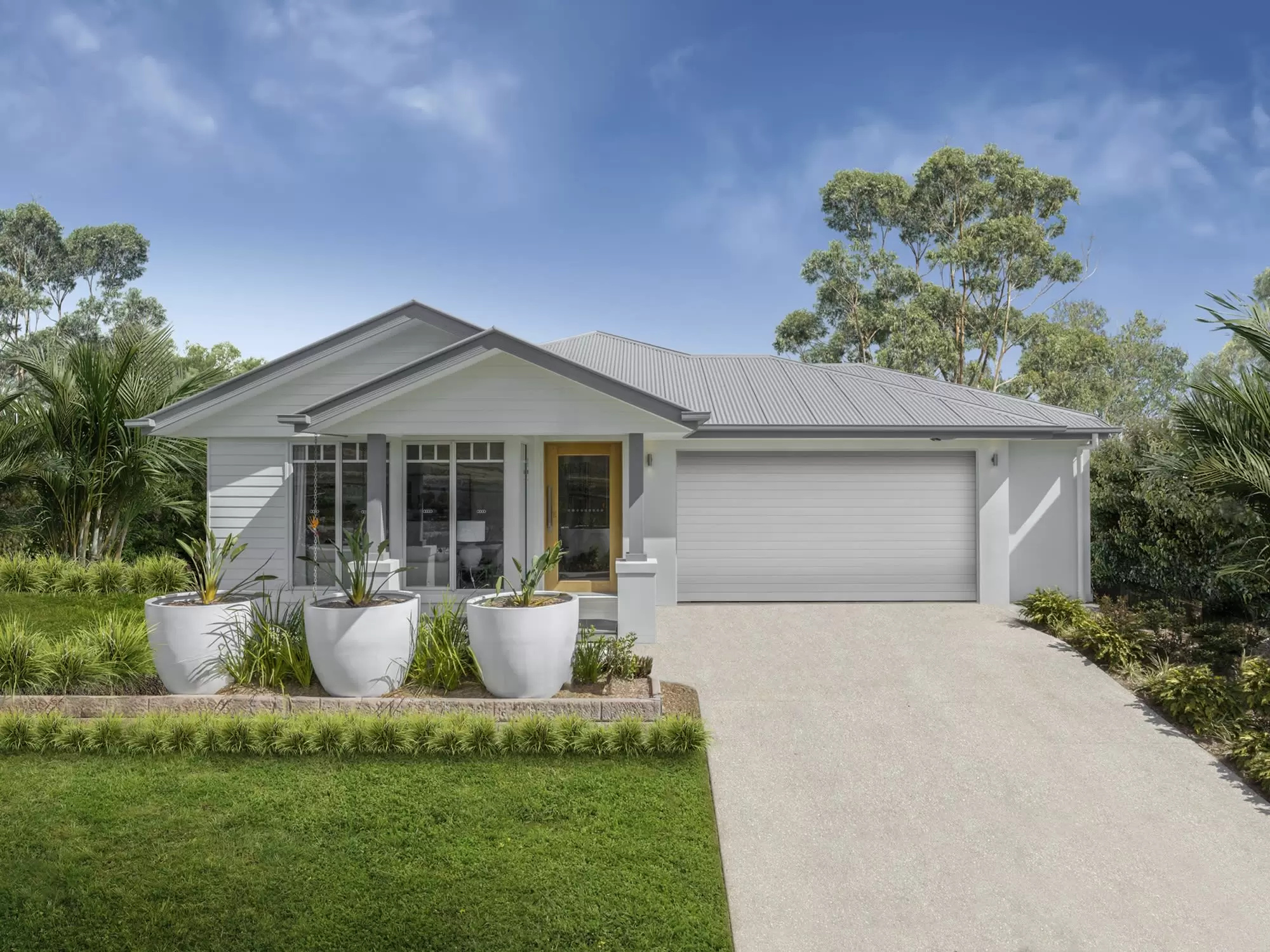
What Construction Finance Actually Covers
Construction finance for a custom home project covers both the land purchase and the staged costs of building your design. Unlike a standard mortgage where funds settle in one amount, lenders release money progressively as each building phase completes and passes inspection.
You'll typically need approval for the full loan amount upfront, covering land purchase, building contract, and associated costs. The lender pays the land vendor in full at settlement, then releases construction funds in instalments as your registered builder completes foundation, frame, lockup, fixing, and practical completion stages. Between land settlement and the first construction drawdown, you'll pay interest only on the land component.
Consider a buyer who secures a fixed price building contract with a registered builder on the Central Coast. The contract price sits at $480,000, the land at $420,000. The lender approves the combined loan amount of $900,000 plus costs. At land settlement, the buyer pays interest on roughly $420,000. Once the slab goes down and passes inspection, the lender releases the first progress payment directly to the builder, and the interest calculation adjusts to include that drawdown. This continues through each stage until the home reaches practical completion and the loan converts to a standard home loan with principal and interest repayments.
Fixed Price Contracts and Why Lenders Require Them
Lenders overwhelmingly prefer fixed price building contracts for custom home finance. A fixed price contract means your builder has quoted a set amount to complete the work described in your council-approved plans, and that price won't shift unless you make variations.
This structure protects both you and the lender from cost blowouts. If the builder underestimates timber or labour costs halfway through, that's their issue to manage within the agreed contract sum. The lender knows exactly how much funding the project requires, and you're not scrambling to find extra cash mid-build. Cost-plus contracts, where you pay the builder's actual costs plus a margin, create uncertainty that most lenders won't accept for owner-occupier custom builds.
Your building contract should specify the total price, the number of progress payments, what work triggers each payment, and a timeframe for completion. Most registered builders working on custom homes use a five-stage payment schedule aligned with the Housing Industry Association or Master Builders Association guidelines. The lender's valuer will cross-reference your contract against your council-approved plans before formal approval.
How the Progressive Drawdown Actually Works
The progressive drawdown is the mechanism that separates construction finance from a standard mortgage. You'll only pay interest on funds the lender has actually released, not the full approved loan amount.
After land settlement, your builder starts work. When they reach the base stage, usually after completing the slab and any required plumbing or drainage beneath it, they'll request the first progress payment. You submit a payment request to your lender, including the builder's invoice and a copy of the signed contract. The lender arranges a progress inspection, where a building inspector or valuer confirms the stage is complete and the quality meets acceptable standards. Once cleared, the lender transfers the progress payment directly to the builder's account, usually within a few business days. A Progressive Drawing Fee applies at each drawdown, typically between $300 and $500 depending on the lender.
This process repeats at frame stage, lockup, fixing, and practical completion. Between drawdowns, you're paying interest only on whatever amount has been released so far. If you've drawn down $250,000 of a $900,000 loan, your interest charges apply to that $250,000, not the full amount. Once the final inspection clears and practical completion is certified, the loan converts to standard principal and interest repayments unless you've structured it otherwise.
Ready to get started?
Book a chat with a Finance & Mortgage Broker at CoastFin today.
Land and Construction Packages Versus Separate Purchases
You can finance a custom home build through a land and construction package, where you buy house and land together from a developer or project home builder, or by purchasing suitable land separately and engaging your own builder later.
A land and construction package often suits buyers who want a streamlined process. The developer has already secured council approval for the estate, the land is titled and ready to build on, and the builder provides fixed price contracts with predictable timelines. Lenders view these packages favourably because the variables are contained. The downside is less design flexibility. You're typically choosing from a range of pre-designed homes with limited customisation.
Buying land separately and engaging a custom builder gives you complete control over design and materials. You'll need to ensure the land suits your building plans before committing. Check zoning, easements, slope, and whether services like sewer, water, and power are connected or require extension. Your lender will want to see a council-approved development application before releasing construction funds, so you can't start building the day after land settles. This path takes longer but delivers exactly the home you want. Both approaches are accessible through construction loans structured to match your situation.
What Happens If You Want to Build in Stages
Some buyers want to build in stages, perhaps completing the main dwelling first and adding a granny flat or studio later. Most construction lenders won't fund staged builds under a single approval unless both stages are covered by the one building contract and council approval.
If your development application covers a main residence and a secondary dwelling, and your builder has priced both in the fixed price contract, the lender can approve the full scope. The progress payment schedule just extends to cover additional stages. However, if you're planning to build the main house now and come back in two years for the granny flat, you'll need separate finance for that second build. The lender treats it as a new project with a fresh application and valuation.
In our experience, buyers in areas like Wamberal or Forresters Beach sometimes purchase larger blocks with plans to build a main home and a smaller dwelling for rental income. Structuring this as a single project from the outset, with a builder and approval that covers everything, keeps the finance straightforward and avoids a second round of application fees and assessments.
Council Approval and Why It Matters to Your Lender
Your lender needs to see council approval before they'll release construction funds. This typically means a development application that's been approved and any conditions satisfied, or at minimum, a complying development certificate if your build qualifies.
Council approval confirms your plans meet local regulations for setbacks, height, materials, and environmental considerations. For a lender, it's proof that the home you're financing is legally permitted and unlikely to face stop-work orders or compliance issues. If your approval comes with conditions, such as installing sediment fencing or submitting an arborist report, you'll need to satisfy those before the first drawdown.
On the Central Coast, council approval timelines vary depending on the complexity of your design and the local authority's workload. A straightforward single-storey home on a flat block might clear in eight to twelve weeks. A two-storey custom design on sloping land near bushfire-prone areas could take four to six months. Factor this into your timeline, especially if you have a clause in your land contract requiring you to commence building within a set period from the settlement date.
Interest Rates and How They Compare to Standard Home Loans
Construction loan interest rates sit slightly higher than standard variable home loans, typically by 0.10% to 0.30%, depending on the lender and your deposit size. This reflects the additional administration and risk involved in progressive drawdowns and progress inspections.
During construction, you'll usually make interest-only repayments based on the amount drawn down so far. Once the build completes and the loan converts to a standard mortgage, you can switch to principal and interest repayments. Some lenders let you fix the rate on the land component immediately and keep the construction component variable until completion, then fix the whole loan at that point. Others prefer you stay variable throughout construction and lock in a rate only after practical completion.
You won't pay interest on funds sitting in the undrawn portion of your loan. If your approved loan amount is $900,000 and you've drawn down $400,000, your interest charges apply to that $400,000. As each progress payment releases, your repayments adjust to reflect the new drawn balance. The Progressive Drawing Fee charged at each stage is separate from interest and typically ranges from $300 to $500 per drawdown, so budget for five of these across a standard build.
What Owner Builder Finance Looks Like
Owner builder finance is available but substantially harder to secure than finance for a project managed by a registered builder. Lenders see owner builders as higher risk because most applicants lack professional building experience, and cost and timeline blowouts are common.
If you're considering acting as owner builder to save on builder margins, expect lenders to require a larger deposit, often 20% or more, and charge a higher interest rate. You'll need to prove you have the skills and time to manage the project, coordinate sub-contractors, and meet building code requirements. The lender will want detailed costings for every trade and material, and they'll scrutinise your progress claims more closely. Many lenders simply won't offer owner builder finance at all.
In a scenario where a buyer has extensive trade experience and wants to project-manage their own build on the Central Coast, perhaps in an area like Terrigal where land prices push total costs higher, the time and money saved on builder fees might justify the additional complexity. But for most buyers, engaging a registered builder simplifies the finance process and reduces the risk of the project stalling due to cash flow or coordination issues.
Deposit Requirements and Genuine Savings
Most lenders require a minimum 10% deposit for construction finance, though 20% opens up more options and lower interest rates. The deposit needs to cover both the land purchase and a portion of the building contract.
Genuine savings, meaning funds you've held in your accounts for at least three months, form the core of your deposit. Lenders accept sale proceeds from a previous property, gifts from family, or equity in an existing property as additional deposit sources. However, relying entirely on a family gift without any demonstrated savings history can limit your options, particularly if you're borrowing above 80% of the total project cost.
Your deposit gets applied to the land purchase at settlement, so you'll need that money available before construction starts. The building contract funds release progressively, and your deposit proportion applies across the whole project value, not just the land component. If you're unsure whether your savings and equity are sufficient for the build you're planning, a conversation with a mortgage broker before you sign any contracts saves time and disappointment.
Timeframes and What to Expect from Start to Finish
A construction finance approval typically takes two to four weeks from application to formal approval, assuming your documents are complete and the lender's valuer can inspect the land and review the building contract promptly. Land settlement follows standard conveyancing timelines, usually four to eight weeks after signing the contract of sale.
Once land settles, your builder applies for any final permits and books in trades. Construction timelines vary depending on your home's size, design complexity, and the builder's workload, but most custom builds on the Central Coast take six to twelve months from slab to practical completion. Weather, material delays, and trade availability all affect this timeline.
After practical completion, your lender arranges a final inspection to confirm the home is finished and meets the approved plans. Once that clears, the construction loan converts to a standard mortgage and you can move in. The whole process from land purchase to moving in typically spans twelve to eighteen months. If you're currently renting and planning a custom build, factor that timeline into your budgeting so you're not caught paying rent longer than expected.
When to Speak to a Mortgage Broker About Your Build
Speak to a mortgage broker before you sign a land contract or building agreement. Construction finance has more moving parts than a standard home loan, and knowing your borrowing capacity and which lenders suit your situation prevents costly backtracking.
A broker can structure your pre-approval to cover both land and construction, confirm your deposit meets lender requirements, and identify which lenders accept your builder and contract type. Some lenders have preferred builder lists, others require certain building insurance levels, and a few won't lend in specific postcodes or on blocks below a certain size. Finding this out after you've committed to a contract creates problems that are difficult and expensive to fix.
If you're weighing up whether to proceed with a house and land package or buy land and engage a custom builder, a broker can model both scenarios with realistic costs, deposit requirements, and repayment estimates. This takes the guesswork out of your decision and lets you move forward knowing your finance will support the project you're planning. Call one of our team or book an appointment at a time that works for you to talk through your build plans and get your construction finance sorted before you commit to contracts.