
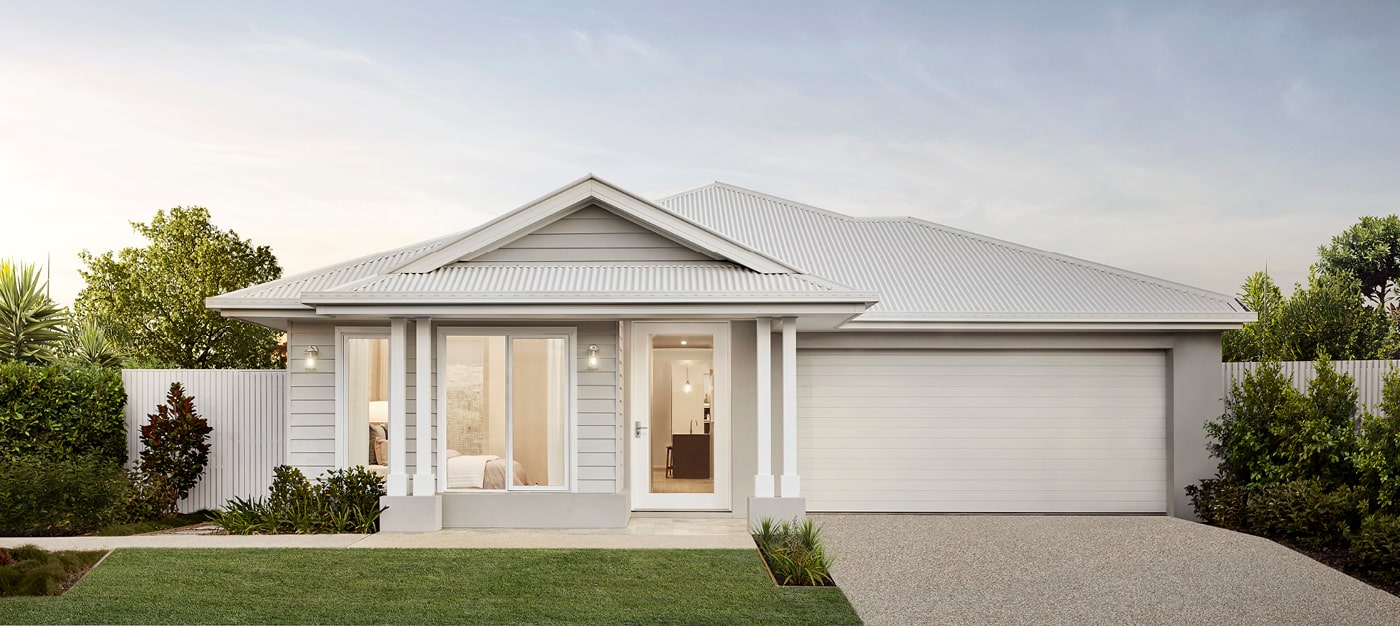
A house and land package can get you into a new home at the Central Coast without competing at auction or bidding over budget.
The difference between a package purchase and an established home is timing. You sign two contracts, pay stamp duty on the land first, and wait months for the build to finish before settlement. That creates opportunities to access grants and schemes that do not apply to existing homes, but it also creates traps if your deposit or approval is not structured around construction timing.
Why House and Land Packages Qualify for More Government Support
A house and land package is treated as a new home, which means you can access the New South Wales First Home Owner Grant of $10,000 if the total package value is under $750,000. You may also qualify for a stamp duty exemption under the First Home Buyers Assistance Scheme if the land is valued under $350,000 and the total package is under $800,000.
These concessions stack with the federal First Home Guarantee, which was expanded in October 2025 to remove income caps and place limits. The scheme allows you to purchase with a 5% deposit without paying Lenders Mortgage Insurance. At the Central Coast, where median house and land packages in growth areas like Warnervale and Wadalba tend to sit within the $650,000 to $750,000 range, this combination can reduce your upfront costs significantly.
Consider a buyer purchasing a $700,000 house and land package with a 5% deposit. Under the First Home Guarantee, they avoid LMI, which would otherwise add around $20,000 to $25,000 to the loan. They also receive the $10,000 grant and pay no stamp duty on the land if it is valued under $350,000. That is close to $50,000 in savings or avoided costs compared to buying an established home at the same price without access to these schemes.
The Two-Contract Structure and What It Means for Your Deposit
You sign a contract to purchase the land and a separate building contract with the developer or builder. Settlement on the land happens first, often within 60 to 90 days. The build then takes anywhere from six to twelve months, depending on the builder's schedule and supply chain.
Your deposit is usually split between the land and the construction. Lenders typically require 5% to 10% of the total package value upfront, but the exact split depends on the developer's terms and your lender's policy. Some developers ask for a deposit on the land and then staged payments during the build, while others structure it as a single deposit covering both.
If you are using the First Home Guarantee, your lender will assess the total package value and approve the loan based on the finished home. But you still need enough cash to settle the land first. That means your deposit needs to cover the land settlement, plus stamp duty on the land, plus conveyancing and other settlement costs for that first contract. If you are counting on the grant to cover part of your deposit, check when it is paid. In New South Wales, the $10,000 First Home Owner Grant is usually paid at land settlement, which helps with that first contract, but you need to confirm timing with your mortgage broker before you exchange.
Ready to get started?
Book a chat with a Finance & Mortgage Broker at CoastFin today.
When Gifted Deposits Work and When They Create Problems
Most lenders accept a genuine gift from a parent or close family member as part of your deposit, but the rules around gifted funds tighten when you are borrowing more than 90% of the property value. Under the First Home Guarantee, you can borrow up to 95%, but some lenders still require at least 5% to come from genuine savings, even if you are using a gift to top up the deposit beyond that.
Genuine savings means money you have saved over at least three months in your own account. A tax refund, inheritance, or sale of an asset can also count, but a cash gift deposited the week before you apply usually does not. If your entire 5% deposit is gifted and you have no savings history, you may find your home loan application knocked back by some lenders, even though the scheme technically allows it.
The other issue with gifted deposits on house and land packages is timing. If your parents are giving you $30,000 but cannot transfer it until after you exchange on the land, you will need a bridging solution or a deposit bond. Some buyers assume they can exchange now and receive the gift later, but the land contract usually requires the deposit within a few days of exchange. Talk through timing with whoever is gifting the funds before you make an offer.
Fixed or Variable During Construction
Your loan does not fully draw down until the build is finished. During construction, you only owe interest on the amount advanced for the land settlement, which is usually around 40% to 50% of the total loan. The rest draws down in stages as the builder hits milestones, or in one final payment at completion.
Some lenders let you lock in a fixed interest rate at approval, which means your rate is set before construction starts and applies once the loan fully draws down. Others require you to take a variable rate during construction and switch to fixed after completion. If rates are rising or you want certainty, locking in early can save you thousands. If rates are falling or you want flexibility, a variable rate during construction with an offset account attached lets you park any extra savings and reduce interest while you wait for the build to finish.
The decision is not one-size-fits-all. It depends on where rates are now, where they are likely to go over the next twelve months, and whether you value certainty over flexibility. A broker can show you what different lenders offer on construction loans and model out the difference between locking in now versus waiting.
Stamp Duty on Land Versus Total Package Value
Stamp duty in New South Wales for a house and land package is calculated on the land value only, not the total package price. If the land is valued at $300,000 and the build is $400,000, you only pay duty on the $300,000. If you are eligible for the first home buyer stamp duty exemption, and the land is under $350,000, you pay nothing.
That is a significant saving compared to an established home. A $700,000 existing property would attract around $26,000 in stamp duty without any concession. On a house and land package in the same price range, you could pay zero if the land portion is under the threshold and you meet the eligibility criteria. The difference is worth confirming before you decide between a package and an established home in Gosford, particularly in estates around Wadalba or Hamlyn Terrace where land is often priced just under the $350,000 threshold.
What Happens If the Build Runs Over Time
Construction delays happen. Supply chain issues, weather, and builder scheduling can push your completion date out by months. If your pre-approval expires before the build finishes, you will need to reapply or extend it, and the lender will reassess your income, expenses, and credit profile at that time.
If your circumstances change during the build, such as a job change, a new car loan, or a drop in income, your borrowing capacity may reduce. In some cases, that means the lender will not settle the final draw down, leaving you with a completed home you cannot pay for. The builder's contract does not pause because your loan falls through, so this is a real risk if you are borrowing at your maximum capacity when you first apply.
One way to manage this is to keep your finances stable during construction. Avoid taking on new debt, changing jobs, or making large purchases until after final settlement. If a delay looks likely, contact your lender or broker early to extend your approval rather than waiting until it lapses. Most lenders will extend for another three to six months without a full reapplication if your circumstances have not changed.
Want to know more?
If you are looking at house and land packages at the Central Coast and want to understand how the grants, deposit requirements, and construction loan structure apply to your situation, call one of our team or book an appointment at a time that works for you.