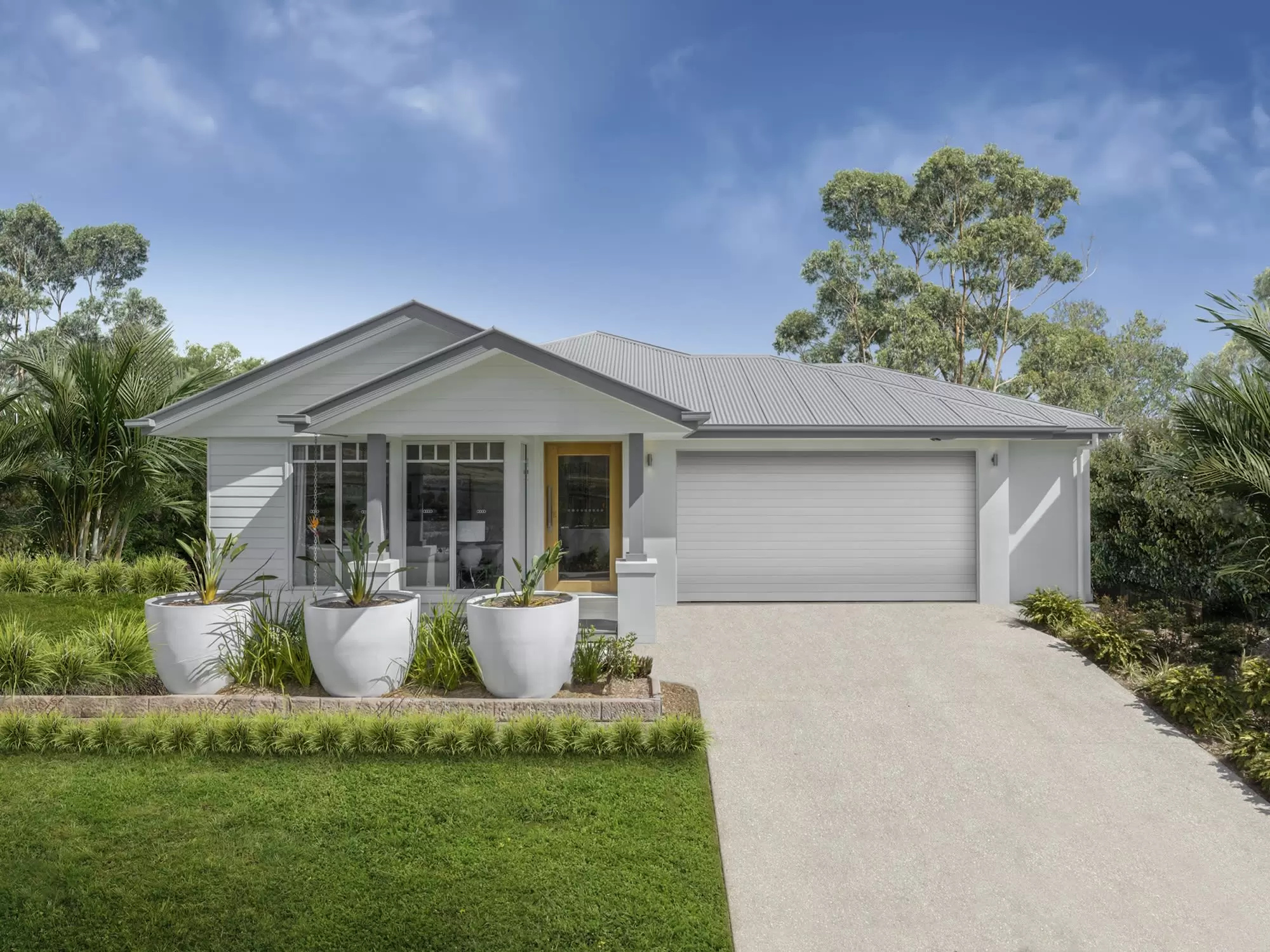

For many families, buying a home is not just about bedrooms, bathrooms and backyard space. It is also about lifestyle, community, commute times and, increasingly, access to the right school.
Across the Central Coast, families often look closely at suburbs and pockets connected to well-regarded public schools such as Terrigal, Avoca Beach, Wamberal, Erina Heights, Point Clare, Kincumber, Gosford, Wyoming and the broader Brisbane Water area. The same pattern plays out across Sydney, Newcastle, Brisbane, Melbourne and regional Australia: when a school is highly regarded, homes inside the local intake area can attract stronger buyer demand.
But here is the important point: a “school zone home loan” is not a separate loan product. It is a finance strategy. It is about structuring your lending so you can move quickly, borrow safely and keep your repayments manageable if you are paying more for location.
Why school catchments can influence property prices
School catchment areas matter because public school enrolment is often linked to where a child lives. In NSW, the Department of Education’s School Finder allows parents to search by home address or school name to check local intake areas, and schools may require proof of address for enrolment. Schools that are above or near their enrolment buffer may use a 100-point residential address check.
That creates a simple property-market dynamic: when more families want to live inside a particular intake area than there are homes available, competition can rise.
Domain’s School Zones Report tracks property price performance by overlaying government school catchment zones with housing data, and Australian research has also examined the relationship between school zoning and house prices.
On the Central Coast, this does not mean every home inside a catchment automatically carries a fixed premium. A home’s value still depends on land size, property condition, street position, beach proximity, transport, zoning, flood or bushfire considerations and comparable sales. For example, Terrigal and Avoca Beach are already premium lifestyle markets, with recent market profiles showing median house prices around the mid-$1 million range.
The lesson for buyers is clear: do not assume the suburb name is enough. Check the actual property address against the current school intake map before making an offer.
The finance issue: school-zone buying can stretch your budget
Buying into a desired catchment can change your loan application in several ways.
You may need a larger loan. You may have a higher loan-to-value ratio. You may trigger Lenders Mortgage Insurance. You may have less cash left over after settlement. And if you have children, lenders will already be factoring dependants and household living costs into your borrowing capacity.
Australian lenders also assess new home loan applications with a serviceability buffer. APRA confirmed in July 2025 that the mortgage serviceability buffer remains at 3 percentage points. In practice, that means lenders do not simply assess whether you can afford the loan at today’s rate; they test whether you could still afford it if rates were higher.
That buffer is one reason two families with similar incomes can receive very different borrowing outcomes depending on their lender, debts, credit card limits, dependants, employment type and living expenses.
Understand the real cost of paying more for location
A school-zone purchase premium can feel manageable at auction, but it needs to be tested over the life of the loan.
For example, if you pay an extra $80,000 for a home inside a preferred catchment and borrow that full amount over 30 years at 6.50% p.a., that extra $80,000 adds roughly $506 per month to your repayments. Over 30 years, the additional interest on that $80,000 alone is approximately $102,000, assuming the rate and loan term stay unchanged.
That does not mean the purchase is wrong. For many families, access to a preferred public school, reduced private school costs, shorter commutes and a better long-term lifestyle may justify the decision. But it should be a deliberate choice, not a rushed one.
Ready to get started?
Book a chat with a Finance & Mortgage Broker at CoastFin today.
LVR, deposit size and Lenders Mortgage Insurance
Your loan-to-value ratio, or LVR, is the size of your loan compared with the property value. If you borrow more than 80% of the property value, Lenders Mortgage Insurance, or LMI, will usually apply. LMI protects the lender, not the borrower, and is generally a one-off cost payable by the borrower.
This is where school-zone buying can become more expensive than expected. If your deposit was comfortable for a $950,000 purchase but the right home in the preferred catchment is $1.1 million, your deposit may no longer stretch as far. You might move from an 80% LVR position to an 85% or 90% LVR position, which can increase both the loan amount and the upfront cost of buying.
For eligible first home buyers, the Australian Government 5% Deposit Scheme may help reduce upfront costs by allowing a lower deposit without LMI, subject to eligibility and property price caps.
The key is to model all scenarios before you start negotiating: 80% LVR, 85% LVR, 90% LVR, with and without LMI, and with a realistic cash buffer after settlement.
Why an offset account can be powerful for families
An offset account is one of the most useful loan features for families buying into a higher-priced location.
An offset account is a transaction account linked to your home loan. The balance in the offset reduces the amount of your loan that is charged interest. For example, if you have a $500,000 loan and $20,000 in offset, interest is calculated on $480,000.
For families, the benefit is flexibility. You can keep savings available for school uniforms, laptops, excursions, sport, music, childcare, holidays or emergency costs, while still reducing interest on your mortgage.
For example, keeping an average of $25,000 in offset against a variable home loan at 6.50% p.a. could reduce interest by around $1,625 per year, before considering compounding benefits. The money remains accessible, but while it sits in offset, it is working against your home loan.
Should you split your loan?
A split loan can also make sense when you are borrowing more for a school-zone purchase.
A split loan allows part of your loan to be fixed and part to remain variable. MoneySmart describes this as a partially fixed home loan, where one portion has a fixed rate and the other has a variable rate.
For example, a family borrowing $900,000 might choose to fix $500,000 for repayment certainty and keep $400,000 variable with an offset account. The fixed portion can provide budgeting stability, while the variable portion gives flexibility for extra repayments, redraw or offset savings.
The right split depends on your income, risk tolerance, cash flow, planned renovations, likelihood of moving and whether you expect your savings balance to grow.
Be careful fixing if you may move again
Families sometimes buy into a primary school catchment and then move again before high school. Others buy a smaller home to secure the area, planning to upgrade later.
If you fix your home loan and then sell during the fixed-rate period, you may face break costs. Some lenders offer loan portability or security substitution, which may allow you to keep the same loan and swap the property used as security, but eligibility conditions apply.
This is important if your school strategy is staged. If there is a real chance you will move within two to four years, flexibility may matter more than chasing the lowest fixed rate.
Do not rely on suburb name alone
This is one of the biggest mistakes families make.
A property may be in Terrigal but not necessarily in the intake area you expected. A home may sit near a school but fall outside the boundary. In some areas, one side of a street can be treated differently from the other.
Before making an offer, buyers should:
- Search the actual property address using the relevant state school finder tool.
- Check the school’s enrolment policy.
- Confirm whether proof of residence is required.
- Understand that boundaries and enrolment rules can change.
- Speak directly with the school if timing is critical.
This applies beyond NSW. Queensland, for example, defines school catchment areas as the geographic location where a state school’s core intake of students must live, and out-of-catchment enrolment is not guaranteed.
Get pre-approval before the school calendar creates pressure
School enrolment timing can create urgency. If you need to be living in a catchment by a certain date, finance needs to be organised early.
Home loan pre-approval generally lasts for 3–6 months and helps you understand your likely borrowing limit before you make an offer. It does not guarantee final approval, but it gives you a clearer price range and can help you move faster when the right property appears.
For school-zone buyers, pre-approval is especially valuable because it can uncover issues early, such as:
- borrowing capacity being lower than expected;
- credit card limits reducing serviceability;
- car loans or personal loans restricting borrowing power;
- LMI changing the total loan required;
- lender policy not suiting your family structure;
- insufficient savings left after stamp duty and costs.
The earlier these issues are identified, the more options you have.
Should you use a family guarantee?
For some buyers, a family guarantee can help reduce or avoid LMI by allowing a family member to provide limited additional security. This can be useful when the family has strong income but not enough deposit to buy in the preferred catchment.
However, it is not a decision to take lightly. MoneySmart warns that going guarantor means taking on serious risk, including the possibility that the guarantor may have to repay the debt if the borrower cannot.
A family guarantee should be structured carefully, with a clear exit plan. Ideally, the guarantee is limited, reviewed regularly and released once the borrower has enough equity.
How CoastFin helps families structure the right loan
Buying into a school catchment is emotional. It is about your children, your family routine and your long-term lifestyle. But the finance still needs to be sensible.
At CoastFin, we help families across the Central Coast and throughout Australia compare lenders, model repayment scenarios and structure their loan around both the purchase and the years that follow.
That may include:
- reviewing borrowing capacity across multiple lenders;
- comparing LVR and LMI options;
- modelling repayments at different purchase prices;
- assessing offset, redraw and split-loan structures;
- considering fixed versus variable options;
- planning for future moves, renovations or high school catchment changes;
- helping you understand whether the school-zone premium is manageable.
The goal is not just to help you buy the property. It is to help you buy it with confidence, clarity and a loan structure that still works once normal family life begins.
Final thought
A better school catchment can be a smart lifestyle decision, but it should not be made on emotion alone.
Before you stretch your budget, check the catchment, confirm the enrolment rules, understand the full cost of the higher purchase price and get your finance structure right from the beginning.
The right home loan will not make the property cheaper, but it can make the decision clearer, safer and more manageable for your family.
Thinking about buying into a school catchment on the Central Coast or elsewhere in Australia? Speak with the CoastFin team before you make an offer, so we can help you understand your borrowing capacity, repayment options and loan structure before the pressure of the property search begins.